
On 22 October 2014, Christophe de Margérie — Pouyané’s predecessor and mentor — died when his jet struck a snow plough on a Moscow runway. Within days, Pouyané was named CEO of one of the world’s largest energy companies, at the moment the oil industry was entering its most disruptive decade since the 1970s. Over eleven years he has transformed Total into TotalEnergies — now producing 34.1 GW of renewable capacity and 43.9 million tonnes of LNG — while insisting the transition cannot be rushed without breaking the energy systems billions depend on.
Sources: TotalEnergies FY2024 Results (Feb 2025) | TotalEnergies FY2025 Results (Feb 2026) | TotalEnergies Q1 2025 Results (Apr 2025) | TotalEnergies H1 2025 Report | Wikipedia: Patrick Pouyané | TotalEnergies.com: Chairman Biography | McKinsey Interview: Patrick Pouyané (Feb 2025) | Council on Foreign Relations CEO Speaker Series (Feb 2025) | CNBC FY2024 Coverage (Feb 2025) | Enerdata FY2025 Production Data
The Corps des Mines Engineer Who Inherited a Crisis
Born on 24 June 1963 in Petit-Quevilly, Patrick Pouyané is a product of the French grandes écoles at its most selective: École Polytechnique, then Chief Engineer of the Corps des Mines. Between 1993 and 1996 he served as technical advisor to Prime Minister Balladur and Chief of Staff to Minister François Fillon. This formation — scientific, administrative and political simultaneously — explains his approach to energy transition: grounded in engineering constraints, regulatory reality and long institutional time horizons.
He joined Total in 1997 in Angola, rose through Qatar, refining and chemicals before being appointed CEO the day after de Margérie’s death in 2014. He has described thinking of himself as one of ten CEOs across TotalEnergies’ 100-year history, and asking: ‘If you don’t move in this electricity segment, it will be difficult to catch up.’ He was reappointed at the May 2024 AGM until 2027.
“It would have been more comfortable to remain an oil-and-gas-only company even if we had to face criticism. But I thought that if we didn’t make that decision, our successors would regret it.”
— Patrick Pouyané, McKinsey Interview, February 2025
🏭 FY2024 adjusted net income: $18.3 billion; ROACE 14.8% — best among majors for third consecutive year (TotalEnergies FY2024 Results, February 2025)
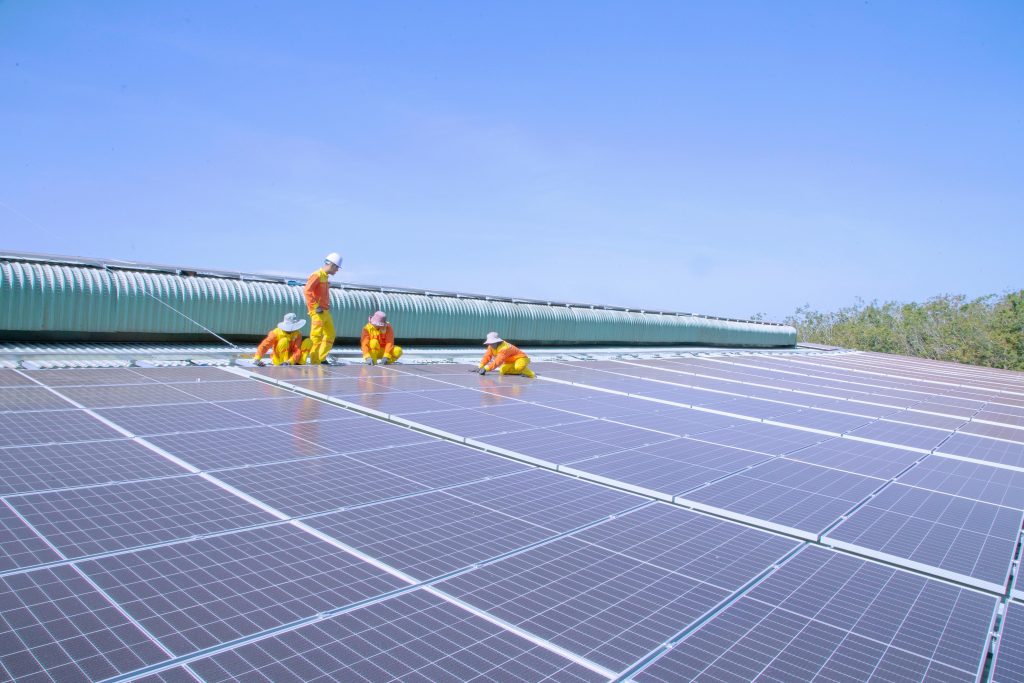
📈 Renewable capacity (end-2025): 34.1 GW gross installed — +8 GW added in 2025 alone (TotalEnergies FY2025 Results, February 2026 / Enerdata)
🛢 LNG sales (FY2025): 43.9 million tonnes (+10% YoY); portfolio of 40+ Mt/yr (Enerdata FY2025 Data; TotalEnergies FY2024 Results)
⚡ Net electricity production (2025): 48.1 TWh (+17% YoY); target >100 TWh at 12% ROACE by 2030 (TotalEnergies FY2025 Results; McKinsey Interview 2025)
The TotalEnergies Model: Three Interlocking Pillars
Pillar 1: Hydrocarbons — Funding the Transition, Not Abandoning It
Pouyané’s core argument: the energy transition cannot be financed without hydrocarbons. In 2024, E&P generated $10 billion in adjusted net income and $17 billion in cash flow. Operating costs remained below $5/boe; reserves replacement reached 157%; methane emissions fell 15% YoY; total GHG fell 3%. The oil business, he argues, must be low-cost and low-emission to stay investable — while generating the cash to transform the rest of the portfolio.
The contrast with American supermajors is deliberate. While ExxonMobil and Chevron have retreated from renewable commitments, Pouyané invested $5.8 billion in low-carbon activities in 2024 (33% of $17.8 billion total capex) and committed $4.5 billion of $17–17.5 billion planned for 2025. EU carbon pricing and the CSRD create structural incentives absent in the US — but the divergence also reflects Pouyané’s own conviction about long-run value.
Pillar 2: LNG — The Bridge Fuel and the Geopolitical Asset
TotalEnergies’ LNG portfolio exceeds 40 Mt/year. FY2025 sales reached 43.9 Mt (+10% YoY), driven by Ichthys (Australia), Rio Grande (US) and QatarEnergy’s North Field East. In 2024, Pouyané signed a 15-year Sinopec supply contract — 2 Mt/year from 2028 — one of several Asian agreements he described at the CFR as designed to ‘secure revenues’ ahead of expected market tightness.
Russian pipeline gas was ~40% of EU imports before 2022; TotalEnergies’ Gulf Coast, Qatari, Australian and African LNG portfolio has been directly redirected to European terminals since. Forward EU gas prices exceeded $13/Mbtu in Q1 2025; TotalEnergies anticipated selling prices of $9–9.5/Mbtu in Q2 2025. As the largest LNG exporter from the US, Pouyané has made the strategic commitment explicit: ‘TotalEnergies has chosen America.’
Pillar 3: Integrated Power — The Long-Term Bet
Integrated Power — TotalEnergies’ vertically integrated electricity business covering renewable generation, gas backup, battery storage, trading and customer supply — is the most strategically consequential and commercially unproven pillar. Gross renewable capacity reached 34.1 GW end-2025 (+8 GW YoY). In Q1 2025, TotalEnergies acquired German developer VSB, launched battery storage via Kyon Energy, and agreed to supply 30,000 t/year of green hydrogen to RWE for the Leuna refinery from 2030.
Pouyané’s stated target is 100 GW of gross renewable capacity by 2030 and over 100 TWh of net electricity production at a 12% return on average capital employed. To a McKinsey interviewer questioning the 12% target, he made the comparative argument explicitly: ‘The idea that oil is more profitable than electrons is true at $80 per barrel. But it’s not true at $50 or $60. At $50 or $60, we’re doing 10 percent—maybe 12 percent.’ For EU investors, the integrated model’s profitability depends critically on European power market reform and carbon pricing remaining structurally supportive through the 2030s.
TotalEnergies Strategic Dashboard: FY2024 to FY2025
| Metric | FY2024 | FY2025 | Target / Direction |
| Adjusted net income | $18.3bn (−21% YoY) | ~$16bn est. (lower oil prices) | ROACE 14.8% — best among majors |
| Cash flow (CFFO) | $29.9bn | $4.7bn Integrated LNG alone | Buybacks: $2bn/quarter in 2025 |
| LNG sales | 39.8 Mt | 43.9 Mt (+10% YoY) | Target: >40 Mt/yr; portfolio 40+ Mt |
| Renewable capacity | ~26 GW (end-2024) | 34.1 GW (+8 GW in 2025) | Target: 100 GW by 2030 |
| Net electricity production | 41.1 TWh | 48.1 TWh (+17% YoY) | Target: >100 TWh at 12% ROACE |
| Investments in low-carbon | $5.8bn of $17.8bn total | $4.5bn of $17–17.5bn planned | 33% of total capex → low-carbon |
Sources: TotalEnergies FY2024 Results (Feb 2025); TotalEnergies FY2025 Results (Feb 2026); TotalEnergies Q1 2025 Results (Apr 2025); Enerdata FY2025 Production Data.
The Tightrope: Three Structural Tensions for EU Investors
-
The ESG Credibility Gap — Activist Pressure and Legal Challenge
In 2024, the Paris Judicial Court dismissed most climate claims against TotalEnergies. But the $20 billion Mozambique LNG project — suspended in 2021 following jihadist attacks and partially restarted since — remains one of the most contested projects globally, with human rights allegations now subject to official Mozambican investigation launched at TotalEnergies’ own request. For EU investors under SFDR Article 8 and Article 9 mandates, TotalEnergies’ ESG classification remains a live and consequential question.
-
The US Strategy — Geopolitical Exposure to the Trump Energy Agenda
TotalEnergies is the largest LNG exporter from the US Gulf Coast and has sanctioned Rio Grande LNG Train 4, adding 1.5 Mt/year and new Anadarko Basin gas interests. The position is commercially compelling and geopolitically exposed simultaneously. At the CFR in February 2025, Pouyané was circumspect: ‘Putting tariffs on LNG to China — at the end the Chinese will find LNG elsewhere.’ Redistributing US, Australian and Qatari LNG flows across Washington-Beijing tariff structures is now a central variable for the trading desk.
-
The Profitability Transition — Electrons Versus Barrels
Net income fell 21% in 2024 to $18.3 billion (from $23.2 billion in 2023) on lower crude prices and weak refining margins — not structural deterioration. The 14.8% ROACE remains highest among majors. But power market volatility, curtailment risk and the capital intensity of storage and green hydrogen compress Integrated Power returns versus upstream hydrocarbons. At $80/bbl oil outperforms electrons; at $50–60/bbl the equation shifts. Pouyané’s bet: build the electricity business now, before the oil price cycle makes the argument for him.
Conclusion: A Pragmatist in the Age of Energy Ideology
Pouyané’s central argument — that responsible transition and disciplined hydrocarbon production are not contradictory — is the least fashionable position in global energy today. American majors have abandoned renewable ambitions; European activist funds push for faster fossil exit; Brussels tightens carbon standards while seeking gas supply security. Pouyané has held the contested middle ground for eleven years.
The scorecard: 34.1 GW of renewables, 43.9 Mt LNG, 14.8% ROACE best among majors, $20+ billion in low-carbon investment since 2020. Reaching 100 GW by 2030 requires 66 GW in five years — demanding, but a company that added 8 GW in 2025 alone has demonstrated the execution pace. For EU investors at the intersection of energy security, decarbonisation and industrial competitiveness, TotalEnergies under Pouyané is the most instructive case study in European energy: a company that has chosen complexity over clarity, and is, so far, making it work.
