
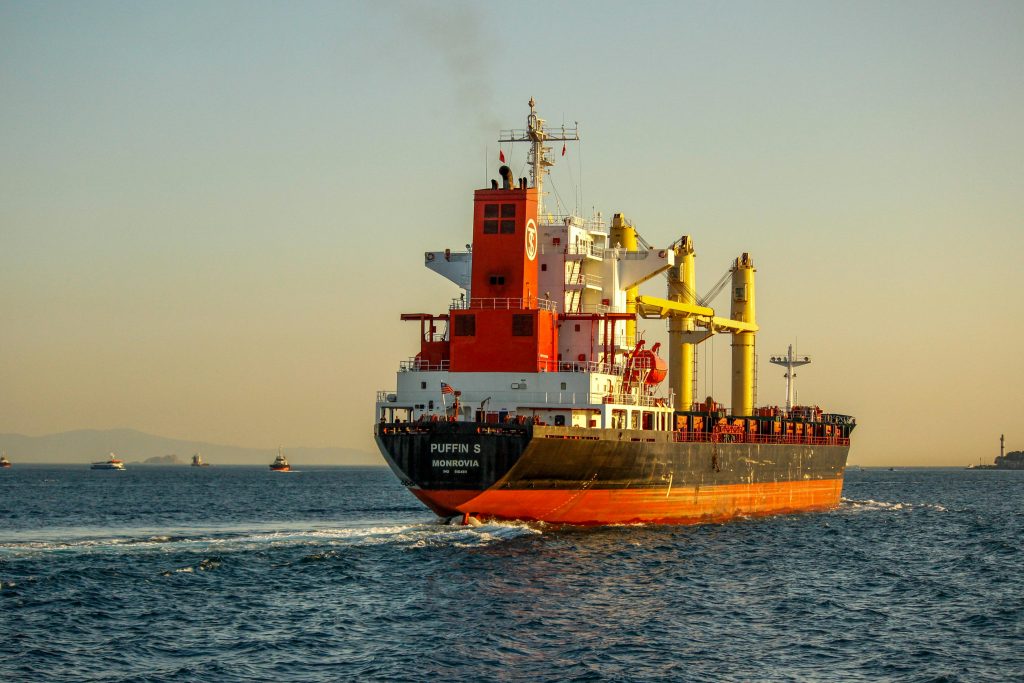
The Strait of Hormuz — 34 kilometres wide at its narrowest point — carries 20.5 million barrels of oil per day, accounting for 21% of global oil consumption and 27% of all seaborne crude trade. The IEA has classified the current Iran conflict as the largest oil supply disruption in modern history: an estimated 8 million barrels per day removed from global markets, exceeding the 1973 Arab embargo (5 mb/d) and the 1979 Iranian Revolution (5.6 mb/d) in absolute scale. Gulf production has been cut by more than 10 mb/d. OPEC spare capacity — the primary buffer against supply shocks — stands at approximately 3.5 mb/d, covering less than half the disruption. The U.S. Strategic Petroleum Reserve is at its lowest level since 1983. Brent crude has breached $130 per barrel. The IMF models a sustained $10/bbl oil price increase as reducing global GDP by 0.4% — and this disruption is an order of magnitude larger. For the U.S. and EU, this is not a regional crisis with manageable spillovers. It is a direct macroeconomic shock propagating through energy costs, inflation, monetary policy, and industrial competitiveness simultaneously.
The Chokepoint Architecture: Why 34 Kilometres Moves Markets
🛢️ Strait of Hormuz throughput: 20.5 mb/d (2025), representing 21% of global oil consumption and 27% of all seaborne crude — plus 20% of global LNG trade — EIA, World Oil Transit Chokepoints, 2025
⛽ Current disruption scale: ~8 mb/d removed from global supply, vs. 1973 Arab embargo: 5 mb/d; 1979 Iranian Revolution: 5.6 mb/d — largest in modern history — IEA Oil Market Report, March 2026
🏗️ OPEC spare capacity: ~3.5 mb/d (Saudi Arabia + UAE), covering less than 44% of the current supply gap — the buffer is insufficient at this shock magnitude — OPEC Monthly Oil Market Report, March 2026
The EIA identifies six critical transit passages through which approximately 63% of globally traded oil passes — Hormuz is the most concentrated of all. The Saudi East-West pipeline (5 mb/d) and UAE’s ADCOP (1.5 mb/d) together offer just 6.5 mb/d in bypass capacity, already operating near their limits under emergency conditions — less than a third of normal strait volume. Gulf production losses exceeding 10 mb/d — combining Iran’s 3.4 mb/d, Iraqi loading terminal interruptions (~4.3 mb/d), and Kuwaiti and UAE export delays — have overwhelmed OPEC+ spare capacity. At $130+ per barrel, Brent is pricing a sustained disruption: markets are not pricing a receding shock. (IEA, March 2026; S&P Global Commodity Insights, March 2026)
“This is not a supply disruption that spare capacity can absorb. At 8 million barrels per day, the gap exceeds the entire production of Iran, Iraq, and Kuwait combined in a normal month. The market has no precedent for managing this at speed.”
— IEA Oil Market Report, March 2026

The U.S. Position: Energy Superpower, Constrained Responder
🇺🇸 U.S. oil production: 13.2 mb/d (2025), world’s largest producer — yet Brent-linked gasoline benchmarks mean U.S. pump prices track global shocks regardless of domestic output — EIA Short-Term Energy Outlook, March 2026
📦 U.S. Strategic Petroleum Reserve: ~347 million barrels (Feb 2026), the lowest level since 1983; a full release (~1 mb/d for 1 year) covers less than 13% of the global supply gap — U.S. DOE, SPR Inventory Data, February 2026
💵 Goldman Sachs models: each $10/bbl sustained oil increase reduces U.S. real GDP growth by ~0.15pp and raises CPI by ~0.3pp — compounding an already-elevated inflation environment — Goldman Sachs Global Investment Research, March 2026
The paradox of U.S. energy vulnerability is structural. At 13.2 mb/d, the U.S. is the world’s largest producer — yet gasoline prices are benchmarked to Brent, not WTI domestic spot. A $130 Brent price transmits to approximately $4.80–5.20 per gallon — a level that, sustained over two quarters, historically produces measurable consumer spending contraction. The SPR’s depleted state — 347 million barrels, down from 638 million in 2020 — limits Washington’s intervention capacity: a full emergency release covers less than 5% of the cumulative global shortfall. Both administrations’ post-2022 drawdowns have left the reserve structurally below the IEA’s 90-day net import coverage threshold. The Federal Reserve, like the Bank of England post-Ukraine, faces a supply-side oil shock that rate hikes cannot resolve without deepening output loss. (U.S. DOE, 2026; Federal Reserve, March 2026)
The Global Impact Scorecard: Winners, Losers, and Transmission Channels
| Economy / Region | Oil Import Exposure | Key Vulnerability | Shock Impact Assessment |
| European Union | ~27% of crude via Hormuz corridor | Qatar LNG (20% of EU gas imports) + Gulf crude rerouting costs | Brent at $130 adds ~€60bn/yr to EU energy import bill; risks re-igniting 2022-style inflation spiral |
| United States | Net exporter — but Brent-linked | SPR at 40-yr low; gasoline benchmark exposure; Fed policy constrained | $4.80–5.20/gal gasoline; 0.15pp GDP drag per $10/bbl; 2026 midterms political pressure |
| China | ~5 mb/d via Hormuz (50% of imports) | No significant strategic reserve release capacity; yuan pressure | Largest volume loser; growth target of ~5% at material risk; PBoC forced into stimulus mode |
| Japan & South Korea | ~90% of crude via Hormuz | Zero domestic production; limited substitute suppliers | Most exposed OECD economies; BOJ rate normalisation path disrupted; current account deterioration |
| India | ~55% of crude via Hormuz | Discounted Russian oil partially offsets but Hormuz LPG is irreplaceable | Fuel subsidy fiscal cost surges; RBI torn between inflation and growth support |
| Russia | Major non-Gulf producer | Higher oil revenues; reroutes Asian customers from Gulf to own supply | Fiscal beneficiary; geopolitical leverage increases vs. Western sanctions architecture |
| Saudi Arabia / UAE | Producers with bypass capacity | East-West pipeline (5 mb/d) + ADCOP (1.5 mb/d) only partial bypass | Revenue surge offset by regional instability; Aramco capex plans at risk; net complex |
| Emerging Markets | High import dependence | Dollar-denominated oil + strong USD = double squeeze | Sri Lanka/Pakistan-style balance of payments stress for 20+ vulnerable economies (IMF, 2026) |
Sources: IEA Oil Market Report March 2026 | EIA Short-Term Energy Outlook March 2026 | IMF World Economic Outlook 2025–26 | S&P Global Commodity Insights 2026 | World Bank Commodity Markets Outlook 2026
Europe’s Compound Vulnerability: The Post-Ukraine Energy Architecture Under Stress
🇪🇺 EU LNG from Qatar: ~20% of total EU gas imports in 2025, transiting Hormuz — the post-Ukraine diversification from Russia created a new Gulf dependency — Bruegel, EU Energy Import Diversification, 2025
💶 Brent at $130 adds approximately €60 billion/year to the EU energy import bill, equivalent to 0.35% of EU GDP — directly compressing household real incomes and industrial margins — European Commission Energy Price Impact Model, 2026
🏭 EU industrial gas price sensitivity: energy-intensive sectors (chemicals, steel, ceramics) face input cost increases of 18–25% at current price levels, threatening competitive displacement to U.S. and Asian producers — Eurostat Energy Price Statistics, Q1 2026
The EU’s post-2022 energy architecture reduced Russian gas dependency from 45% to ~15% — a genuine achievement — but inadvertently concentrated a new exposure in Hormuz. Qatar, supplying approximately 20% of EU LNG imports, exports exclusively via the strait; Gulf crude replacing Russian volumes does the same. Diversifying the source of imports does not diversify away from chokepoint risk when new and old sources share the same corridor. The macroeconomic transmission is direct: Brent at $130 adds approximately €60 billion per year to the EU import bill — 0.35% of GDP — compressing household real incomes and industrial margins. Oxford Economics models a sustained 6-month disruption as reducing eurozone GDP by 1.2–1.8% relative to baseline, sufficient to push Germany and Italy into technical recession. (Bruegel, 2025; Oxford Economics, March 2026)
“Europe solved its Russian gas problem by building an LNG infrastructure that remains hostage to Hormuz. The geography of energy dependence has changed; the structural fragility has not.”
— Bruegel, European Energy Security After Ukraine, 2026

Three Structural Tensions That Define the Energy Security Decade
-
The SPR Depleted Buffer: Can the IEA Response Be Coordinated?
The IEA’s collective emergency mechanism has been activated twice since 2022, with the 2022 release of 240 million barrels the largest in IEA history. Combined member reserves stand at approximately 1.2 billion barrels — but usable capacity is constrained by the depleted U.S. SPR, Japan’s statutory reserve floor, and European storage drawn down through 2022–23. The Oxford Institute for Energy Studies calculates that a coordinated 2 mb/d release for 6 months would consume 360 million barrels — 30% of accessible reserves — providing meaningful but insufficient relief at current disruption magnitudes. (Oxford Institute for Energy Studies, 2026)
-
The Inflation–Recession Dilemma for Central Banks
Goldman Sachs’ March 2026 model estimates each sustained $10/bbl increase in Brent reduces U.S. real GDP by approximately 0.15 percentage points and adds 0.3pp to CPI. At $130 Brent — a $50+ increase from early-2025 levels — the combined effect is a ~0.75pp GDP drag and ~1.5pp CPI uplift over four quarters: a classic stagflationary configuration. For the Fed, already navigating a fragile disinflation path, rate hikes would deepen output loss without resolving the supply-side source of inflation. The ECB faces the same bind, with peripheral sovereign spreads in Italy and Greece already widening on growth-risk repricing.
-
The Accelerated Energy Transition Argument
Every major oil shock since 1973 has produced lasting policy acceleration in energy diversification. The 2022 Ukraine shock advanced EU renewable deployment by an estimated 2–3 years — RePowerEU delivered 50+ GW of additional solar and wind capacity in 2023–24 alone. The current crisis intensifies those economics further: IEA modelling from January 2026 finds that under a $120+ sustained price scenario, EU and U.S. EV adoption rates accelerate by 15–20% relative to baseline and industrial electrification investment increases 12–18%. The Strait of Hormuz is, paradoxically, one of the most powerful policy arguments for accelerating the energy transition. (IEA, World Energy Outlook Scenarios, January 2026)
Conclusion: Geography as Economic Destiny
The Strait of Hormuz has been a focal point of oil market risk since the 1979 Iranian Revolution. What has changed is the scale — 8 mb/d, unprecedented in the modern integrated market era — and the reduced capacity of the system’s shock absorbers: OPEC spare capacity is insufficient, strategic reserves are depleted, and central banks have diminished policy space after three years of post-pandemic normalisation. For U.S. and EU policymakers, the response agenda is convergent: the U.S. must rebuild its SPR and recalibrate monetary policy for supply-side inflation; the EU must complete its diversification architecture to genuinely reduce Hormuz exposure through accelerated renewables, non-Gulf LNG contracts, and industrial demand flexibility. Both face the same long-run conclusion: the transition away from structural dependence on 34 kilometres of contested sea lanes is no longer an environmental aspiration. It is an economic security imperative.
